
Freedom’s Past
Resistance to Racism:
The Philadelphia Roots
Linn Washington Jr.
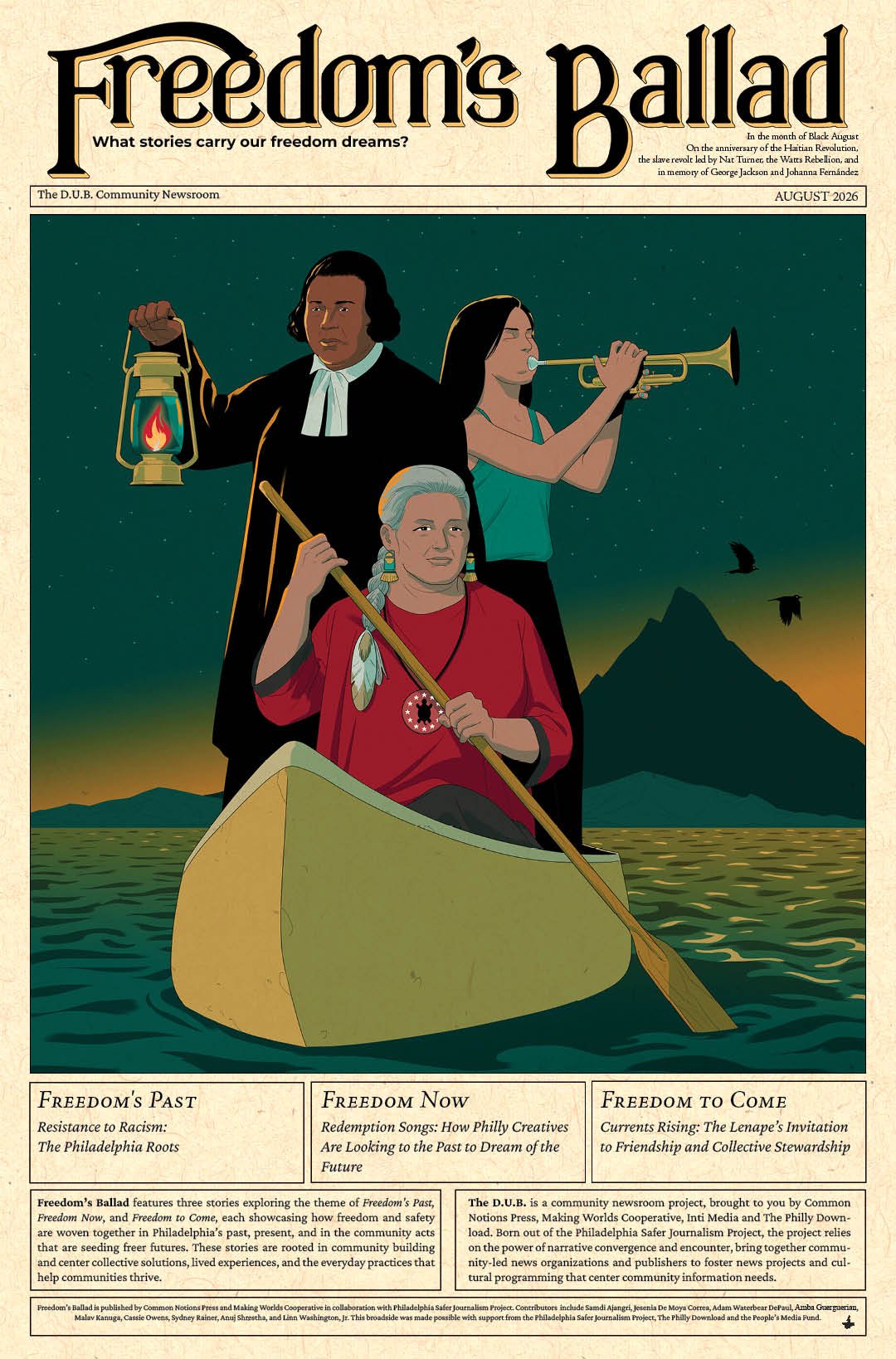
In January, President Trump attempted to erase Philadelphia’s exhibits examining first U.S. Pres-ident George Washington’s ownership of slaves. The powerful opposition this order was met with — large protests and an ongoing legal battle — is part of a long legacy of resistance to racism in the city known as the birthplace of American democracy.
This legacy includes lesser-known events like the 1787 walkout against discrimination in churches, an action leading to the 1816 creation of the United States’s first independent Black denom-ination, the African Methodist Episcopal Church, founded in Philadelphia.
The first pamphlet issued by African Americans assailing racism in the news in 1794 and the first petition seeking an end to slavery sent to Con-gress by African Americans in 1799 both came from Philadelphia.
Philadelphia’s Absalom Jones played a pivotal role in the church walkout, pamphlet and petition. He co-founded the Free African Society in 1787, an organization that provided aid for community needs such as education and burials, and became the first African American ordained priest in the Episcopal Church in 1802.
The resistance firsts continued in Philadelphia well after the United States’ early decades. The 1967 Philadelphia Plan, for instance, was the first U.S. policy to aggressively combat institutional racism in skilled construction jobs.
In the spring of 1963, protestors took to the streets against the exclusion of Black workers from the construction of a junior high school in North Philadelphia. The demonstrations halted construction for nearly three weeks, and Philly police brutally beat protesters. But there was wide community support for the demonstrations, as evidenced in a May 28, 1963 article in The Philadel-phia Tribune that quoted participant and famed Philly boxer Stanley “Kitten” Hayward. “We have suffered at the hands of the white man too long,” Hayward said. “Everybody should have equal job opportunity.” The Philadelphia Plan arose from eventual agreements that ended these protests.
Philadelphia’s resistance to racism also resonates internationally. In 1982, for example, Phila-delphia became the first major U.S. city to divest municipal funds from corporations conducting business in then-apartheid-ruled South Africa, boosting anti-apartheid struggles nationwide.
This legacy of resistance in Philadelphia high-lights the reality the United States persistently denies: the existence of institutional racism. Too many Americans embrace the myth that racism is simply an individualized problem, not one soci-etally sanctioned and historically protected by law.
This legacy of resistance in Philadelphia highlights the reality the United States persistently denies: the existence of institutional racism.
The President’s House exhibit, located outside the entrance of the building that houses the iconic Liberty Bell, includes the first memorial about slavery erected on federal property. It opened in 2010 and highlights those nine enslaved men and women.
The memorial is the product of a years-long struggle by local activists and educators to end federal erasure of the history of racism in the city known for issuing the Declaration of Indepen-dence. Federal authorities defended their initial opposition to a memorial about slavery with the claim that inclusion of enslavement could confuse visitors about the Liberty Bell.
Trump contends that the President’s House exhibitions “disparage” George Washington. He has voiced disgust about federal museum exhibits that place too much emphasis on “how bad slav-ery was” — as if brutal enslavement had any good parts.
Denials about racism typically foist half-truths as full facts. Yes, slavery was legal during George Washington’s lifetime, as Trump notes. But Penn-sylvania law during Washington’s presidency required freedom for any enslaved person held in the state for more than six months by non-resi-dents. In order to skirt this provision, Washington rotated the slaves held in Philadelphia back to his Virginia plantation.
Two of George and Martha Washington’s enslaved people escaped while in Philadelphia, aided by free Blacks.
The Trump administration’s assault on the President’s House memorial generated interna-tional news coverage and sparked resistance from activists and local public officials. The Avenging the Ancestors Coalition, an activist organization at the forefront of defending the memorial, has led multiple protests this year. A leader of ATAC, attor-ney Michael Coard, castigated Trump’s assault as “blatantly racist destruction” in an interview with Philly Voice.
There is an irony in Trump’s attack on refer-ences to slavery at the memorial outside the Liberty Bell building, given that the symbol of American freedom received its name from abolitionists in the 1830s.
—
Trump’s reinvigoration of institutional racism mir-rors Congress’ rejection of the December 1799 peti-tion signed by 71 Black Philadelphians. Petitioners requested that free Blacks “be admitted to partake of the liberties and unalienable rights” promised in the Constitution.
Although the petition is remembered as the first request to Congress from African Americans to end slavery, the document’s principal request was congressional protection for free Blacks from being kidnapped and sold into slavery, a practice depicted in the 2013 Academy Award-winning film “12 Years A Slave.”